
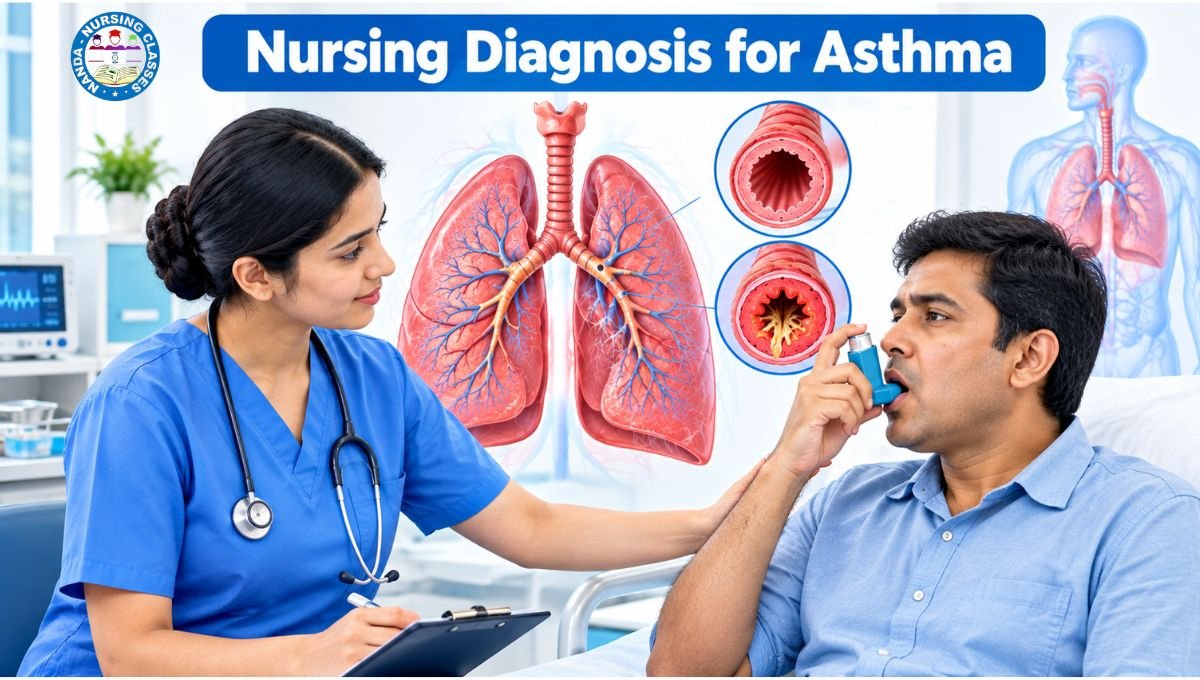
Nursing Diagnosis for Asthma: Complete Nursing Care Plan
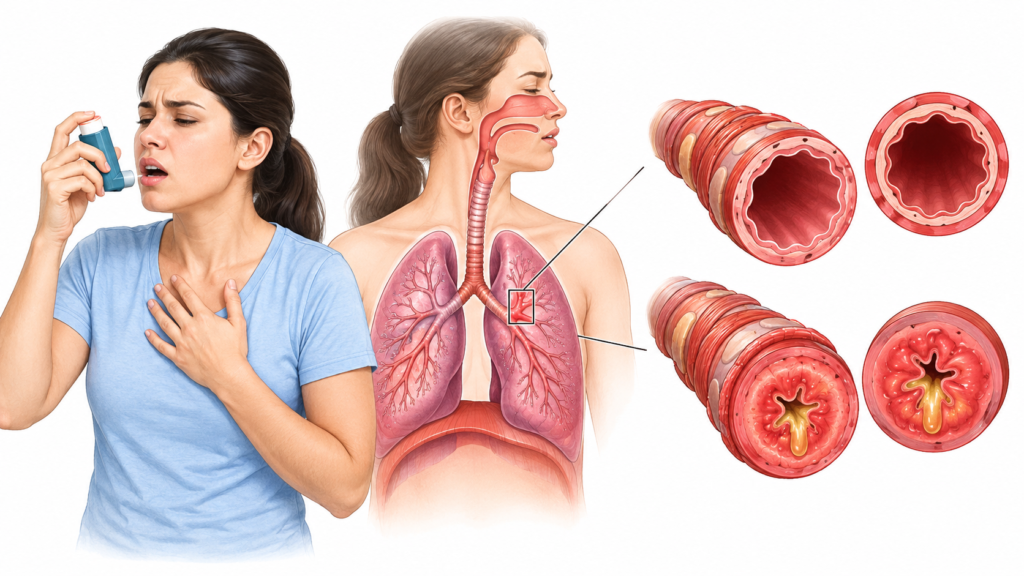
Asthma is a common chronic respiratory condition in which the airways become inflamed, swollen, and sensitive to different triggers. This inflammation can cause bronchoconstriction, increased mucus production, wheezing, coughing, chest tightness, and difficulty breathing. Because asthma can affect breathing and oxygenation, proper nursing assessment and care are important for preventing complications.
When we develop a nursing diagnosis for asthma, we focus on the patient’s current response to the disease rather than simply naming asthma as a medical condition. A nursing diagnosis helps us identify the patient’s problems and plan appropriate nursing interventions.
For GNM and BSc Nursing students, understanding the difference between a medical diagnosis and a nursing diagnosis is especially important.
What Is a Nursing Diagnosis for Asthma?
A nursing diagnosis describes a patient’s actual or potential health response that nurses can assess and manage through nursing care.
For a patient with asthma, we may identify problems related to:
- Difficulty breathing
- Airway obstruction
- Excessive respiratory secretions
- Anxiety
- Activity intolerance
- Ineffective breathing pattern
- Disturbed sleep
- Lack of knowledge about asthma management
The exact nursing diagnosis should be selected according to the patient’s assessment findings. We should not automatically assign every possible diagnosis to every patient with asthma.
Common Nursing Diagnoses for Asthma
Some commonly considered nursing diagnoses for patients experiencing asthma symptoms include:
- Ineffective Airway Clearance
- Ineffective Breathing Pattern
- Impaired Gas Exchange
- Activity Intolerance
- Anxiety
- Deficient Knowledge
- Disturbed Sleep Pattern
The appropriate diagnosis depends on the patient’s symptoms, assessment findings, severity of the asthma episode, and response to treatment.
1. Ineffective Airway Clearance
Ineffective Airway Clearance may be considered when the patient has difficulty clearing secretions or maintaining a clear airway.
During an asthma exacerbation, airway inflammation and bronchoconstriction can narrow the airways. Increased mucus may further contribute to airway obstruction.
Possible Signs and Symptoms
We may observe:
- Persistent cough
- Wheezing
- Difficulty expectorating secretions
- Increased respiratory effort
- Abnormal breath sounds
- Shortness of breath
- Thick respiratory secretions
Example Nursing Diagnosis
Ineffective Airway Clearance related to increased airway resistance and bronchoconstriction as evidenced by wheezing, persistent cough, and difficulty breathing.
Nursing Interventions
We should:
- Assess respiratory rate, rhythm, and depth.
- Auscultate lung sounds.
- Observe for wheezing and changes in breath sounds.
- Position the patient comfortably, often in an upright position.
- Encourage appropriate fluid intake when not contraindicated.
- Encourage effective coughing when appropriate.
- Administer prescribed bronchodilators and other medications.
- Monitor the patient’s response to treatment.
2. Ineffective Breathing Pattern
An asthma attack can change the patient’s normal breathing pattern. Bronchoconstriction increases the effort required to move air through the airways.
Assessment Findings
We may observe:
- Rapid breathing
- Shortness of breath
- Use of accessory muscles
- Difficulty speaking because of breathlessness
- Increased respiratory effort
- Chest tightness
Example Nursing Diagnosis
Ineffective Breathing Pattern related to increased airway resistance as evidenced by tachypnea, dyspnea, and increased respiratory effort.
Nursing Interventions
We should:
- Monitor respiratory rate and pattern.
- Assess the severity of dyspnea.
- Observe for use of accessory muscles.
- Position the patient upright.
- Maintain a calm environment.
- Encourage appropriate breathing techniques.
- Administer prescribed respiratory medications.
- Monitor oxygen saturation as clinically indicated.
- Report worsening respiratory distress promptly.
3. Impaired Gas Exchange
Impaired Gas Exchange may be considered when asthma significantly affects oxygenation or ventilation.
Severe airway obstruction can interfere with normal movement of air into and out of the lungs. Patients with significant respiratory compromise may develop abnormal oxygen saturation or other signs of impaired gas exchange.
Possible Assessment Findings
We should monitor for:
- Reduced oxygen saturation
- Increasing respiratory distress
- Cyanosis
- Restlessness or confusion
- Abnormal arterial blood gas results when obtained
- Severe dyspnea
Example Nursing Diagnosis
Impaired Gas Exchange related to ventilation-perfusion imbalance secondary to airway obstruction as evidenced by decreased oxygen saturation and respiratory distress.
This diagnosis should be based on actual assessment findings rather than simply assuming that every patient with asthma has impaired gas exchange.
Nursing Interventions
We should:
- Monitor oxygen saturation.
- Assess respiratory status frequently.
- Observe for changes in level of consciousness.
- Administer oxygen when prescribed or clinically indicated.
- Administer prescribed medications.
- Monitor response to treatment.
- Report signs of deterioration immediately.
4. Activity Intolerance
A patient with asthma may experience difficulty performing normal activities because breathing requires increased effort.
Shortness of breath may become worse during physical activity, particularly when asthma is poorly controlled.
Example Nursing Diagnosis
Activity Intolerance related to imbalance between oxygen supply and demand as evidenced by dyspnea and fatigue during activity.
Nursing Interventions
We should:
- Assess the patient’s response to activity.
- Monitor respiratory rate before and after activity.
- Provide adequate rest periods.
- Assist with activities when necessary.
- Gradually increase activity according to tolerance.
- Teach the patient how to balance activity and rest.
- Encourage appropriate long-term asthma control.
5. Anxiety
Difficulty breathing can be frightening. A patient experiencing an asthma attack may become anxious because of the sensation of breathlessness.
Anxiety may also increase the patient’s perception of breathing difficulty and make it harder to remain calm during an acute episode.
Example Nursing Diagnosis
Anxiety related to difficulty breathing and perceived threat to health as evidenced by restlessness, fear, and verbalization of anxiety.
Nursing Interventions
We should:
- Remain calm and stay with the patient when appropriate.
- Explain procedures in simple language.
- Encourage the patient to express fears and concerns.
- Reduce unnecessary environmental stimulation.
- Provide reassurance without giving false reassurance.
- Teach appropriate asthma self-management techniques.
- Monitor changes in anxiety as respiratory symptoms improve.
6. Deficient Knowledge About Asthma Management
Knowledge is an important part of asthma care. Patients need to understand their medications, triggers, warning signs, and asthma action plan.
A patient may have inadequate knowledge about:
- Asthma triggers
- Inhaler technique
- Medication schedules
- Rescue medication
- Controller medication
- When to seek emergency care
- Preventing future exacerbations
Example Nursing Diagnosis
Deficient Knowledge related to insufficient information about asthma management as evidenced by incorrect inhaler technique and questions about prescribed treatment.
Nursing Interventions
We should:
- Assess the patient’s current understanding.
- Explain asthma in simple language.
- Teach correct inhaler technique.
- Explain the purpose of prescribed medications.
- Discuss possible asthma triggers.
- Teach the importance of following the prescribed treatment plan.
- Explain warning signs that require urgent medical attention.
- Ask the patient to demonstrate the inhaler technique to confirm understanding.
7. Disturbed Sleep Pattern
Asthma symptoms such as coughing, wheezing, and shortness of breath may interfere with sleep.
Patients who experience nighttime symptoms may wake repeatedly or have difficulty maintaining normal sleep.
Example Nursing Diagnosis
Disturbed Sleep Pattern related to nocturnal coughing and breathing difficulty as evidenced by frequent nighttime awakening and daytime fatigue.
Nursing Interventions
We should:
- Ask about nighttime asthma symptoms.
- Assess sleep duration and quality.
- Monitor the frequency of nighttime coughing or wheezing.
- Identify factors that may worsen symptoms.
- Administer prescribed treatment.
- Encourage the patient to follow the asthma management plan.
- Refer persistent nighttime symptoms for medical evaluation.
Nursing Assessment for a Patient With Asthma
Before selecting a nursing diagnosis, we should perform a systematic assessment.
1. Respiratory Assessment
We should assess:
- Respiratory rate
- Respiratory rhythm
- Respiratory depth
- Breath sounds
- Wheezing
- Cough
- Sputum
- Chest tightness
- Work of breathing
- Use of accessory muscles
2. Oxygenation Assessment
We should monitor:
- Oxygen saturation
- Skin and mucous membrane color
- Level of consciousness
- Signs of respiratory deterioration
3. Patient History
We should ask about:
- Previous asthma attacks
- Known triggers
- Current medications
- Previous hospitalizations
- Use of inhalers
- Medication adherence
- Allergies
- Smoking or environmental exposures
- Nighttime symptoms
Nursing Interventions for Asthma
The nursing care plan should be individualized according to the patient’s condition.
Monitor Respiratory Status
We should regularly assess respiratory rate, breath sounds, oxygen saturation, and work of breathing, particularly during an acute exacerbation.
Position the Patient Properly
An upright or comfortable sitting position may help reduce the work of breathing and improve the patient’s ability to breathe comfortably.
Administer Prescribed Medications
Depending on the patient’s treatment plan, prescribed medications may include inhaled bronchodilators, corticosteroids, or other asthma medications.
We should monitor the patient’s response and observe for adverse effects.
Provide Oxygen When Indicated
Oxygen may be administered according to the patient’s clinical condition and prescribed treatment or institutional protocol.
Reduce Exposure to Triggers
We should help identify and reduce exposure to known triggers such as smoke, dust, allergens, respiratory infections, or other factors identified by the patient and healthcare team.
Provide Patient Education
Education should include:
- Correct inhaler technique
- Medication adherence
- Trigger avoidance
- Recognition of worsening symptoms
- Appropriate use of the asthma action plan
- When to seek urgent medical care
Asthma Nursing Care Plan Example
| Nursing Diagnosis | Goal | Nursing Interventions | Expected Outcome |
|---|---|---|---|
| Ineffective Airway Clearance | Maintain a clear airway | Assess breath sounds, monitor secretions, position upright, administer prescribed medication | Improved airway clearance and reduced wheezing |
| Ineffective Breathing Pattern | Improve breathing pattern | Monitor respiratory rate, assess work of breathing, provide appropriate positioning | Reduced respiratory effort |
| Impaired Gas Exchange | Maintain adequate oxygenation | Monitor oxygen saturation, assess respiratory status, provide oxygen as indicated | Improved oxygenation |
| Activity Intolerance | Improve tolerance to activity | Provide rest periods and gradually increase activity | Performs activities with less dyspnea |
| Anxiety | Reduce anxiety | Stay calm, provide reassurance, explain care | Patient reports reduced anxiety |
| Deficient Knowledge | Improve asthma self-management | Teach medication use, inhaler technique, triggers, and warning signs | Patient demonstrates correct self-care |
Important Points for GNM Nursing Students
When writing a nursing diagnosis for asthma, we should remember that asthma itself is a medical diagnosis. The nursing diagnosis should describe the patient’s response or problem that nursing care can address.
For example:
Medical diagnosis: Asthma
Nursing diagnosis: Ineffective Airway Clearance related to airway obstruction as evidenced by wheezing and difficulty clearing secretions.
The diagnosis should be supported by the patient’s actual assessment findings.
We should also avoid writing a diagnosis simply because it is commonly associated with asthma. For example, not every asthma patient automatically has impaired gas exchange, anxiety, or activity intolerance.
When Is Asthma an Emergency?
Severe asthma symptoms can become life-threatening. Urgent medical evaluation is required when a patient develops signs of severe respiratory distress or rapidly worsening symptoms.
Important warning signs may include:
- Severe difficulty breathing
- Inability to speak normally because of breathlessness
- Increasing respiratory effort
- Significant reduction in oxygen saturation
- Cyanosis
- Altered level of consciousness
- Poor response to prescribed rescue treatment
- Severe exhaustion
Nurses should recognize deterioration early and follow the appropriate emergency protocol.
Conclusion
A well-developed nursing diagnosis for asthma begins with careful assessment. Common nursing problems may include ineffective airway clearance, ineffective breathing pattern, impaired gas exchange, activity intolerance, anxiety, deficient knowledge, and disturbed sleep pattern.
The most appropriate diagnosis depends on the individual patient’s assessment findings. After identifying the nursing diagnosis, we can establish measurable goals, provide appropriate nursing interventions, evaluate the patient’s response, and modify the care plan when necessary.
For GNM and BSc Nursing students, the key is to understand the patient’s actual response to asthma rather than simply memorizing a list of diagnoses. A clear connection between assessment findings → nursing diagnosis → goals → interventions → evaluation makes the nursing care plan more accurate and easier to understand.