
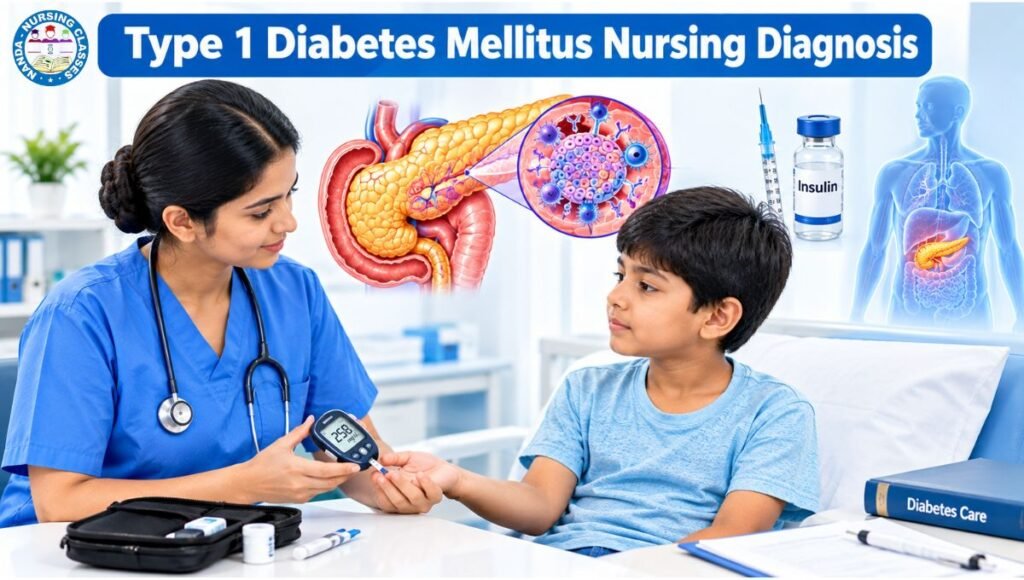
Type 1 Diabetes Mellitus Nursing Diagnosis
Type 1 Diabetes Mellitus (T1DM) is a chronic metabolic condition in which the pancreas produces little or no insulin because of autoimmune destruction of pancreatic beta cells. People with type 1 diabetes require insulin therapy to maintain blood glucose levels and prevent acute and long-term complications.
For nurses, caring for a patient with type 1 diabetes involves much more than monitoring blood glucose. We assess hydration, nutritional status, insulin administration, activity tolerance, knowledge of diabetes self-management, risk of hypoglycemia, and signs of diabetic ketoacidosis (DKA). The nursing diagnosis should always be based on the patient’s actual assessment findings rather than simply assigning every possible diagnosis.
This guide presents commonly applicable Type 1 Diabetes Mellitus nursing diagnoses, along with related factors, assessment findings, goals, nursing interventions, rationales, and evaluation points.
What Is Type 1 Diabetes Mellitus?
Type 1 diabetes occurs when the body’s immune system destroys insulin-producing beta cells in the pancreas, resulting in little or no endogenous insulin production. Without adequate insulin, glucose cannot effectively enter cells for energy and accumulates in the bloodstream.
Common symptoms may include:
- Polyuria – frequent urination
- Polydipsia – excessive thirst
- Polyphagia – increased hunger
- Unexplained weight loss
- Fatigue
- Blurred vision
- Nausea or vomiting in severe metabolic disturbance
Symptoms of type 1 diabetes can develop relatively quickly and may become severe if insulin deficiency is not treated.
Common Type 1 Diabetes Mellitus Nursing Diagnoses
Depending on the patient’s assessment, commonly relevant nursing diagnoses may include:
- Deficient Fluid Volume
- Risk for Unstable Blood Glucose Level
- Imbalanced Nutrition: Less Than Body Requirements
- Deficient Knowledge
- Fatigue
- Activity Intolerance
- Risk for Electrolyte Imbalance
- Risk for Infection
- Anxiety
- Risk for Injury related to hypoglycemia
- Ineffective Health Self-Management
- Risk for Delayed Development, when caring for a child with type 1 diabetes and when supported by assessment findings
The exact diagnosis should be selected according to the patient’s assessment, age, symptoms, laboratory results, treatment plan, and current clinical condition.
1. Deficient Fluid Volume
Nursing Diagnosis
Deficient Fluid Volume related to osmotic diuresis secondary to hyperglycemia as evidenced by increased urination, excessive thirst, dry mucous membranes, weakness, and laboratory evidence of dehydration.
When blood glucose becomes significantly elevated, glucose in the urine can increase urinary water loss. This may contribute to dehydration.
Assessment Findings
We assess for:
- Increased urinary frequency
- Excessive thirst
- Dry mouth
- Dry mucous membranes
- Poor skin turgor
- Weakness
- Tachycardia
- Changes in blood pressure
- Weight changes
- Serum electrolyte abnormalities
Nursing Interventions
- Monitor intake and output.
- Assess vital signs regularly.
- Monitor hydration status.
- Assess mucous membranes and skin condition.
- Monitor blood glucose as ordered.
- Monitor electrolytes and renal laboratory values when indicated.
- Administer prescribed IV fluids when required.
- Encourage oral fluids when appropriate and permitted.
- Observe for signs of worsening metabolic disturbance.
Rationale
Early recognition of fluid loss allows us to intervene before dehydration becomes severe. Significant insulin deficiency and hyperglycemia can contribute to DKA, which can cause substantial fluid and electrolyte disturbances.
2. Risk for Unstable Blood Glucose Level
Nursing Diagnosis
Risk for Unstable Blood Glucose Level related to absolute insulin deficiency, insulin therapy, dietary variations, physical activity, illness, and changes in insulin requirements.
Blood glucose can fluctuate considerably in people with type 1 diabetes. Insulin, food intake, exercise, illness, stress, and other factors can affect glucose levels.
Nursing Interventions
We should:
- Monitor blood glucose according to the prescribed schedule.
- Observe for signs of hyperglycemia.
- Observe for signs of hypoglycemia.
- Administer insulin as prescribed.
- Verify insulin type, dose, timing, and route according to institutional policy.
- Coordinate insulin administration with meals when appropriate.
- Monitor the patient’s response to insulin.
- Encourage appropriate blood glucose monitoring.
- Teach the patient to recognize glucose abnormalities.
- Document glucose readings and interventions.
For many adults with diabetes, a glucose value below 70 mg/dL (3.9 mmol/L) is considered hypoglycemia.
3. Risk for Hypoglycemia and Injury
Hypoglycemia is an important nursing concern in patients receiving insulin.
Assessment
We assess for:
- Sweating
- Tremors
- Hunger
- Palpitations
- Irritability
- Confusion
- Weakness
- Dizziness
- Changes in behavior
- Altered consciousness
- Seizures in severe cases
Hypoglycemia can become dangerous if it is not recognized and treated promptly.
Nursing Interventions
- Monitor blood glucose.
- Assess for early symptoms of hypoglycemia.
- Review insulin administration and meal intake.
- Encourage the patient to keep an appropriate rapid-acting carbohydrate source available according to their individualized diabetes plan.
- Follow the institution’s hypoglycemia protocol when a low glucose level occurs.
- Reassess glucose after treatment as required.
- Educate the patient and family about prevention and recognition of hypoglycemia.
- Assess for recurrent hypoglycemic episodes.
4. Imbalanced Nutrition: Less Than Body Requirements
Nursing Diagnosis
Imbalanced Nutrition: Less Than Body Requirements related to altered glucose metabolism and inadequate utilization of glucose as evidenced by weight loss, increased hunger, weakness, or inadequate nutritional intake.
When insulin is deficient, glucose cannot be adequately utilized by cells. The body may begin using stored fat and protein as alternative energy sources.
Nursing Interventions
- Assess nutritional status.
- Monitor weight.
- Assess dietary intake.
- Monitor blood glucose.
- Collaborate with a dietitian when appropriate.
- Encourage an individualized meal plan.
- Coordinate meals with insulin therapy as prescribed.
- Monitor for nausea and vomiting.
- Provide diabetes nutrition education.
- Assess the patient’s understanding of carbohydrate intake and meal planning.
The goal is to support adequate nutrition while maintaining safe glucose management.
5. Deficient Knowledge
Nursing Diagnosis
Deficient Knowledge related to insufficient information about diabetes self-management as evidenced by incorrect understanding of insulin administration, blood glucose monitoring, nutrition, sick-day management, or recognition of complications.
Education is a major component of type 1 diabetes nursing care.
Nursing Interventions
We should teach the patient about:
- Type 1 diabetes
- Purpose of insulin
- Insulin administration
- Blood glucose monitoring
- Hypoglycemia
- Hyperglycemia
- Nutrition
- Physical activity
- Sick-day management
- Ketone testing when indicated
- Foot care
- Follow-up appointments
- When to seek emergency medical care
6. Deficient Knowledge Related to Diabetic Ketoacidosis
Diabetic ketoacidosis (DKA) is particularly important in type 1 diabetes.
DKA develops when there is insufficient insulin, causing the body to break down fat and produce ketones. Excess ketones can lead to metabolic acidosis. DKA can be life-threatening and requires urgent medical treatment.
Signs of DKA
We monitor for:
- Excessive thirst
- Frequent urination
- Nausea
- Vomiting
- Abdominal pain
- Dehydration
- Weakness
- Fruity-smelling breath
- Deep or rapid breathing
- Altered mental status in severe illness
Nursing Interventions
- Monitor blood glucose.
- Monitor ketones when clinically indicated.
- Monitor vital signs.
- Assess respiratory pattern.
- Monitor hydration status.
- Monitor electrolytes and acid-base status as ordered.
- Administer prescribed IV fluids.
- Administer insulin according to the treatment protocol.
- Monitor potassium and other electrolytes.
- Monitor neurological status.
- Report deterioration immediately.
DKA treatment commonly involves fluid replacement, electrolyte management, and insulin, together with treatment of the underlying precipitating cause.
7. Risk for Electrolyte Imbalance
Nursing Diagnosis
Risk for Electrolyte Imbalance related to osmotic diuresis, dehydration, insulin therapy, and metabolic alterations.
DKA and significant hyperglycemia can produce important fluid and electrolyte abnormalities.
Nursing Interventions
- Monitor serum electrolytes.
- Monitor intake and output.
- Assess cardiac rhythm when indicated.
- Monitor neurological status.
- Monitor renal function.
- Administer electrolyte replacement as prescribed.
- Monitor the patient’s response to treatment.
- Report significant laboratory abnormalities promptly.
Careful electrolyte monitoring is particularly important during treatment of DKA.
8. Fatigue
Nursing Diagnosis
Fatigue related to altered metabolic processes and inadequate cellular utilization of glucose as evidenced by weakness, reduced energy, and decreased ability to perform usual activities.
Nursing Interventions
- Assess fatigue severity.
- Encourage appropriate rest periods.
- Monitor blood glucose.
- Assess nutritional intake.
- Encourage appropriate physical activity based on the patient’s condition.
- Identify factors contributing to fatigue.
- Monitor for acute complications such as hypoglycemia or DKA.
9. Activity Intolerance
Nursing Diagnosis
Activity Intolerance related to decreased energy availability and metabolic imbalance as evidenced by weakness, fatigue, or reduced tolerance for physical activity.
Nursing Interventions
- Assess the patient’s activity tolerance.
- Monitor pulse and other vital signs as appropriate.
- Assess glucose before and/or after activity according to the individualized care plan.
- Encourage gradual activity progression.
- Provide rest periods.
- Teach the relationship between physical activity, food intake, and insulin.
- Monitor for symptoms of hypoglycemia during and after exercise.
10. Risk for Infection
People with diabetes can have increased vulnerability to certain infections, particularly when glucose management is poor.
Nursing Interventions
We assess for:
- Fever
- Skin breakdown
- Wounds
- Redness
- Swelling
- Drainage
- Urinary symptoms
- Respiratory symptoms
- Oral problems
We should also:
- Maintain appropriate hygiene.
- Encourage appropriate skin and foot care.
- Monitor wounds.
- Monitor blood glucose.
- Administer prescribed medications.
- Educate the patient about early reporting of infection symptoms.
11. Anxiety
Nursing Diagnosis
Anxiety related to chronic disease management, insulin therapy, fear of hypoglycemia, lifestyle changes, or hospitalization as evidenced by verbalized concerns, restlessness, or difficulty concentrating.
Type 1 diabetes requires ongoing self-management, and the treatment burden can affect emotional well-being.
Nursing Interventions
- Encourage the patient to express concerns.
- Listen without judgment.
- Provide clear and age-appropriate information.
- Involve family members when appropriate.
- Teach practical self-management skills.
- Encourage questions.
- Refer to appropriate diabetes education or mental-health support when indicated.
The objective is to help the patient develop confidence in diabetes self-management rather than creating fear around the disease.
Type 1 Diabetes Mellitus Nursing Care Plan
| Nursing Diagnosis | Main Goal | Important Nursing Interventions |
|---|---|---|
| Deficient Fluid Volume | Maintain adequate hydration | Monitor I&O, vital signs, hydration status, fluids |
| Risk for Unstable Blood Glucose Level | Maintain glucose within individualized target | Monitor glucose, administer insulin, assess response |
| Risk for Hypoglycemia/Injury | Prevent complications of low glucose | Monitor symptoms, treat low glucose according to protocol |
| Imbalanced Nutrition | Maintain adequate nutritional status | Monitor diet, weight, glucose, coordinate nutrition care |
| Deficient Knowledge | Improve self-management knowledge | Teach insulin, glucose monitoring, diet and warning signs |
| Risk for Electrolyte Imbalance | Maintain electrolyte balance | Monitor electrolytes, I&O, ECG when indicated |
| Fatigue | Improve energy and activity tolerance | Rest, nutrition, glucose monitoring, gradual activity |
| Activity Intolerance | Improve tolerance for activity | Assess response to activity and provide rest |
| Risk for Infection | Prevent or identify infection early | Skin/foot care, hygiene, wound assessment |
| Anxiety | Reduce distress and improve coping | Emotional support, education, communication |
Type 1 Diabetes Nursing Assessment
A systematic nursing assessment helps us identify actual and potential problems.
1. Blood Glucose Assessment
Monitor:
- Capillary blood glucose
- Continuous glucose monitoring data when available
- Trends in glucose levels
- Episodes of hypoglycemia
- Episodes of hyperglycemia
2. Hydration Assessment
Assess:
- Intake and output
- Thirst
- Urination
- Mucous membranes
- Skin condition
- Blood pressure
- Heart rate
- Body weight
3. Nutritional Assessment
Assess:
- Appetite
- Food intake
- Weight
- Meal patterns
- Carbohydrate intake
- Nausea and vomiting
- Ability to follow the prescribed meal plan
4. Insulin Assessment
Check:
- Prescribed insulin
- Dose
- Timing
- Administration technique
- Injection sites
- Adherence
- Patient’s understanding of insulin therapy
5. Complication Assessment
Monitor for:
- Hypoglycemia
- Severe hyperglycemia
- DKA
- Dehydration
- Electrolyte abnormalities
- Infection
- Skin or foot problems
Expected Outcomes for Type 1 Diabetes Nursing Care
After nursing interventions, appropriate outcomes may include:
- The patient maintains blood glucose within the individualized target range.
- The patient remains adequately hydrated.
- The patient demonstrates correct insulin administration.
- The patient correctly demonstrates blood glucose monitoring.
- The patient identifies signs and symptoms of hypoglycemia.
- The patient explains when ketone testing may be necessary.
- The patient identifies warning signs of DKA.
- The patient maintains adequate nutritional intake.
- The patient demonstrates appropriate foot and skin care.
- The patient participates actively in the diabetes management plan.
- The patient and family demonstrate improved confidence in diabetes self-care.
Patient Education for Type 1 Diabetes Mellitus
Patient education should be individualized and practical.
We should teach patients to understand the relationship between insulin, food, physical activity, illness, and blood glucose.
Important teaching points include:
- Take insulin exactly as prescribed.
- Monitor blood glucose according to the individualized plan.
- Learn the symptoms of hypoglycemia.
- Know how to respond to low blood glucose.
- Understand symptoms that may indicate DKA.
- Follow the prescribed nutrition plan.
- Discuss exercise and insulin adjustments with the diabetes care team.
- Follow sick-day instructions.
- Know when to check ketones according to the care plan.
- Attend scheduled healthcare appointments.
If blood glucose is very high during illness or symptoms of DKA develop, urgent medical evaluation may be necessary.
Evaluation of Type 1 Diabetes Nursing Care
Nursing care should be evaluated continuously.
We ask:
- Has the patient’s blood glucose improved?
- Is hydration adequate?
- Has urine output improved?
- Is the patient free from signs of hypoglycemia?
- Are there signs of DKA?
- Does the patient understand insulin administration?
- Can the patient demonstrate glucose monitoring?
- Does the patient recognize hypo- and hyperglycemia?
- Is nutritional intake adequate?
- Has anxiety decreased?
- Can the patient participate in self-management?
If goals are not achieved, the nursing care plan should be reassessed and modified according to the patient’s current condition.
Conclusion
Type 1 Diabetes Mellitus nursing diagnosis should be based on a complete assessment of the patient’s physical, nutritional, metabolic, psychological, and educational needs. Important nursing concerns can include unstable blood glucose, deficient fluid volume, nutritional imbalance, risk for hypoglycemia, electrolyte imbalance, deficient knowledge, fatigue, activity intolerance, infection risk, and anxiety.
The nurse plays a central role in glucose monitoring, insulin safety, hydration assessment, recognition of hypoglycemia and DKA, patient education, and promotion of long-term self-management. Because type 1 diabetes requires lifelong insulin therapy and ongoing monitoring, effective nursing care combines immediate clinical assessment with practical patient education and individualized support.
Important: Nursing diagnoses should be selected according to the patient’s actual assessment findings and the current nursing-diagnosis terminology used by the relevant educational institution or clinical setting. They should not be assigned solely because a patient has type 1 diabetes.
References
- American Diabetes Association Professional Practice Committee for Diabetes. 6. Glycemic Goals, Hypoglycemia, and Hyperglycemic Crises: Standards of Care in Diabetes—2026. Diabetes Care. 2026;49(Supplement 1):S132–S149.
Read the full ADA article - American Diabetes Association Professional Practice Committee for Diabetes. 16. Diabetes Care in the Hospital: Standards of Care in Diabetes—2026. Diabetes Care. 2026;49(Supplement 1):S339–S355.
Read the full ADA article - Centers for Disease Control and Prevention (CDC). Type 1 Diabetes. May 15, 2024.
Read the CDC resource - Centers for Disease Control and Prevention (CDC). Diabetic Ketoacidosis. May 15, 2024.
Read the CDC resource - Centers for Disease Control and Prevention (CDC). Low Blood Sugar (Hypoglycemia). May 16, 2024.
Read the CDC resource - Centers for Disease Control and Prevention (CDC). Treatment of Low Blood Sugar (Hypoglycemia). May 15, 2024.
Read the CDC resource